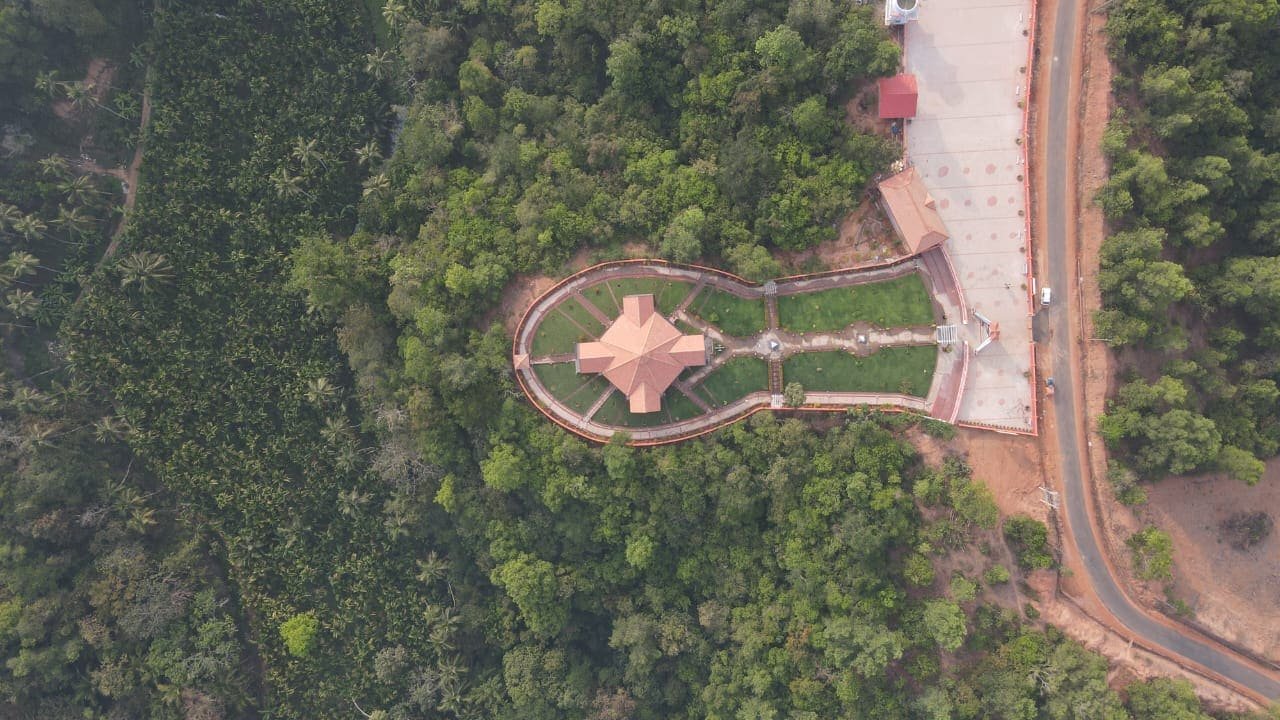
The sacred shrine of Sri Kodandarama Panchamukhi Anjaneya Kshetra, Hanumagiri is located in a serene environment amidst the tranquil coastal region, considered the cradle of Sanatana culture, surrounded by the green ranges of the Sahyadri hills, the picturesque natural beauty of the Malenadu region, and lush forested hills.
Mythological Origin
According to mythological stories, during the war in the Ramayana, when Indrajit, the son of Ravana, used a powerful weapon against Lakshmana, Lakshmana fell unconscious. At that time, Hanuman was instructed to bring special medicinal herbs such as Sanjeevini and Vishalyakarani from Mount Dronagiri in the Himalayas. When Hanuman reached Mount Dronagiri, he could not identify the herb, so he lifted the entire mountain and carried it. While carrying the mountain, some parts of it fell in certain regions. When Hanuman returned the mountain to the Himalayas after the battle, he realized that some parts of the mountain were missing. While searching for them, Hanuman came to the Tapobhumi (penance land) of Sage Vasu. According to the request of Sage Vasu, he subdued the demons and stayed there for the welfare of the world. Later, the sacred land where Hanuman stayed came to be known as Hanumagiri.
Establishment of the Sacred Shrine
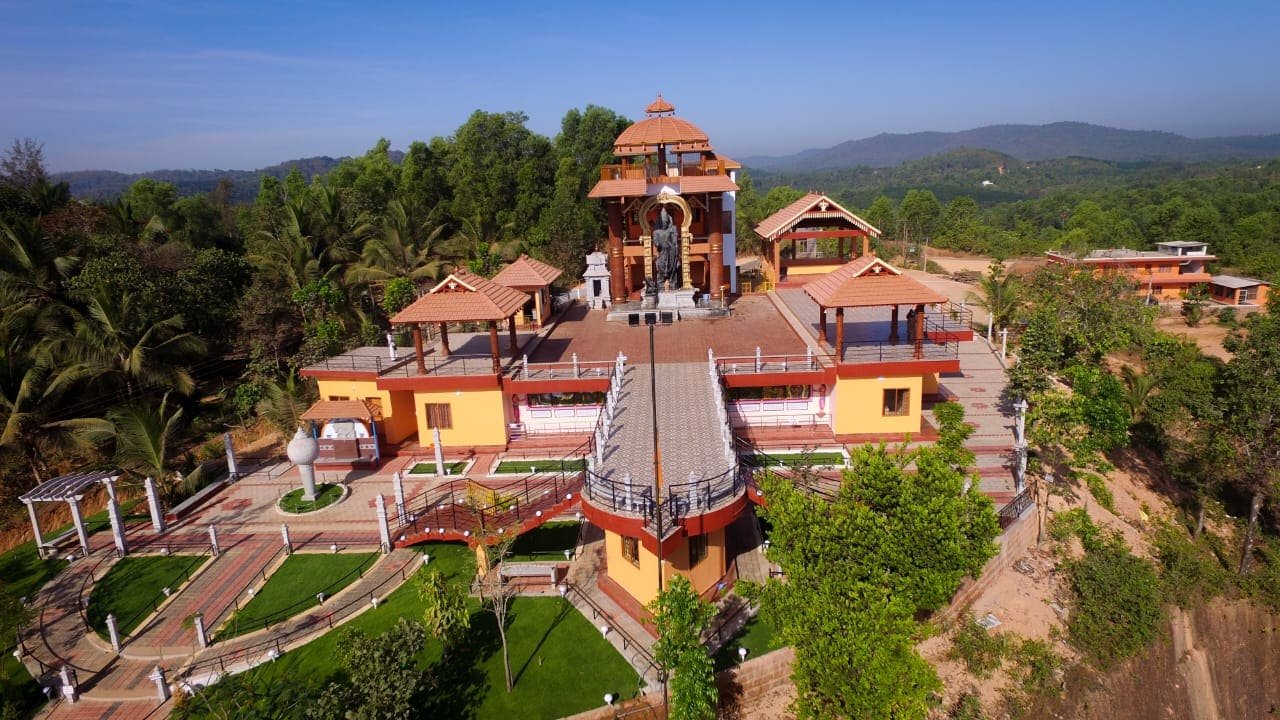
Later, under the leadership of Dharmashree Pratishthana, and with the guidance of scholars, in the year 2011, an 11-foot tall Ekakrishna Shila (single black stone) idol of Sri Panchamukhi Anjaneya, symbolizing the unity of Narasimha, Garuda, Varaha, Hayagriva, and Anjaneya, was installed in the sacred shrine. At the same time, in order to present the world’s greatest epic Ramayana in a simple form for everyone, a Ramayana Theme Park with stone carvings was constructed. A Sanjeevini forest with fruits and flowers containing various native plant species, Kapilashrama Goshala with Indian indigenous cow breeds, and Vaidehi Sabha Bhavana to support public events were also established. As Sri Panchamukhi Anjaneya of Hanumagiri, located at the foothills of the Sahyadri mountains, began fulfilling the wishes of devotees, the number of devotees visiting the shrine increased tremendously.
Arrival of Sri Kodandarama and Amaragiri
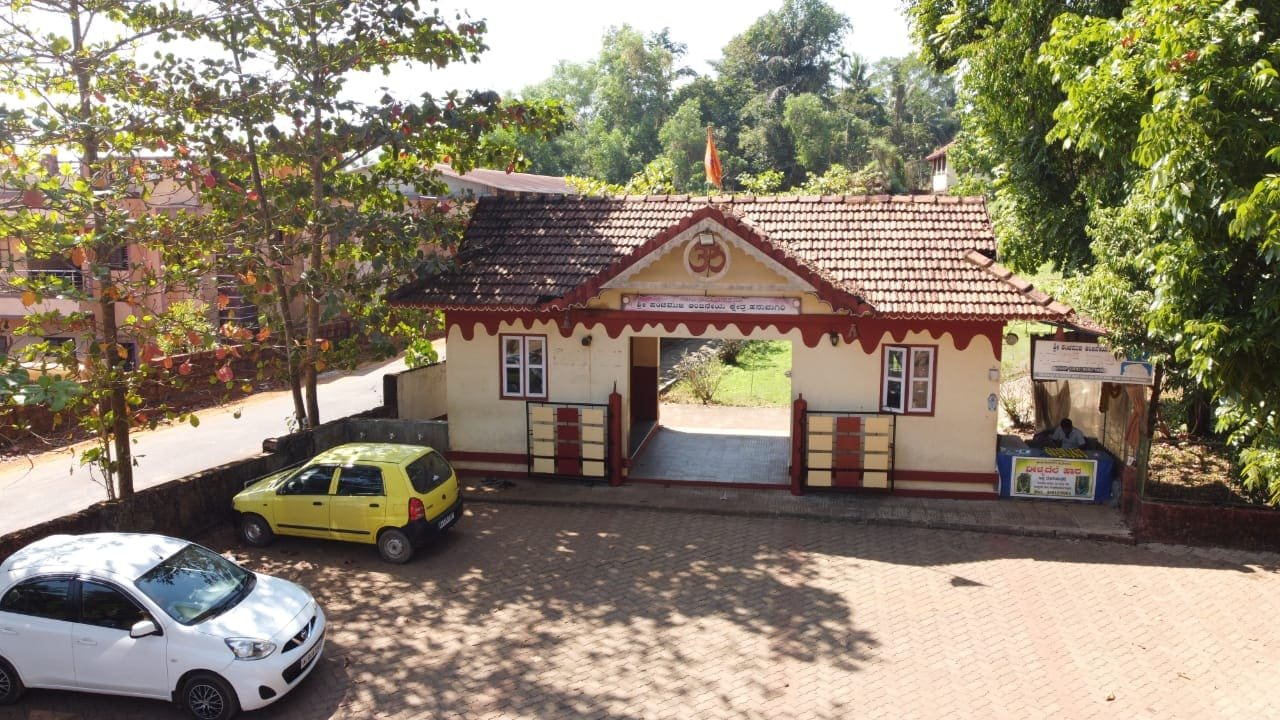
Wherever Hanuman is present, Rama must also be present. Rama and Hanuman share an inseparable bond. According to the wish of Sri Panchamukhi Anjaneya and with the guidance of scholars, in 2017, a 26-foot tall Ekakrishna Shila idol of Sri Kodandarama, in Hoysala style with a pedestal, was installed in the presence of distinguished dignitaries along with Balaganapati, Bhakta Anjaneya, and Naga Sannidhi. This is considered the tallest single black-stone Kodandarama idol in the world. With the vision that devotion to God must also include devotion to the nation, “Amaragiri” was constructed in 2023 under the leadership of Dharmashree Pratishthana, which includes the Bharat Mata Temple made of Amrita stone and the Amar Jyoti Soldier Memorial. India’s Honorable Home Minister Shri Amit Shah inaugurated Amaragiri. Today, it is a matter of pride that the second Bharat Mata Temple in South India is located at Hanumagiri. With the blessings of Rama and Hanuman, religious, social, educational, healthcare, and cultural services are continuously being carried out under the leadership of the sacred shrine.
Present Significance of Hanumagiri
Today at Hanumagiri, there is Kodandarama, Hanuman, and Bharat Mata. There are also Bhakta Anjaneya, Balaganapati, Naga Sannidhi, and the Soldier Memorial. Mother Sita resides here in the form of beautiful nature. Many services, including rituals for the removal of Shani Dosha, are continuously performed in the shrine. From kings and dignitaries to common people, lakhs of devotees visit the shrine every day and receive the blessings of the divine.